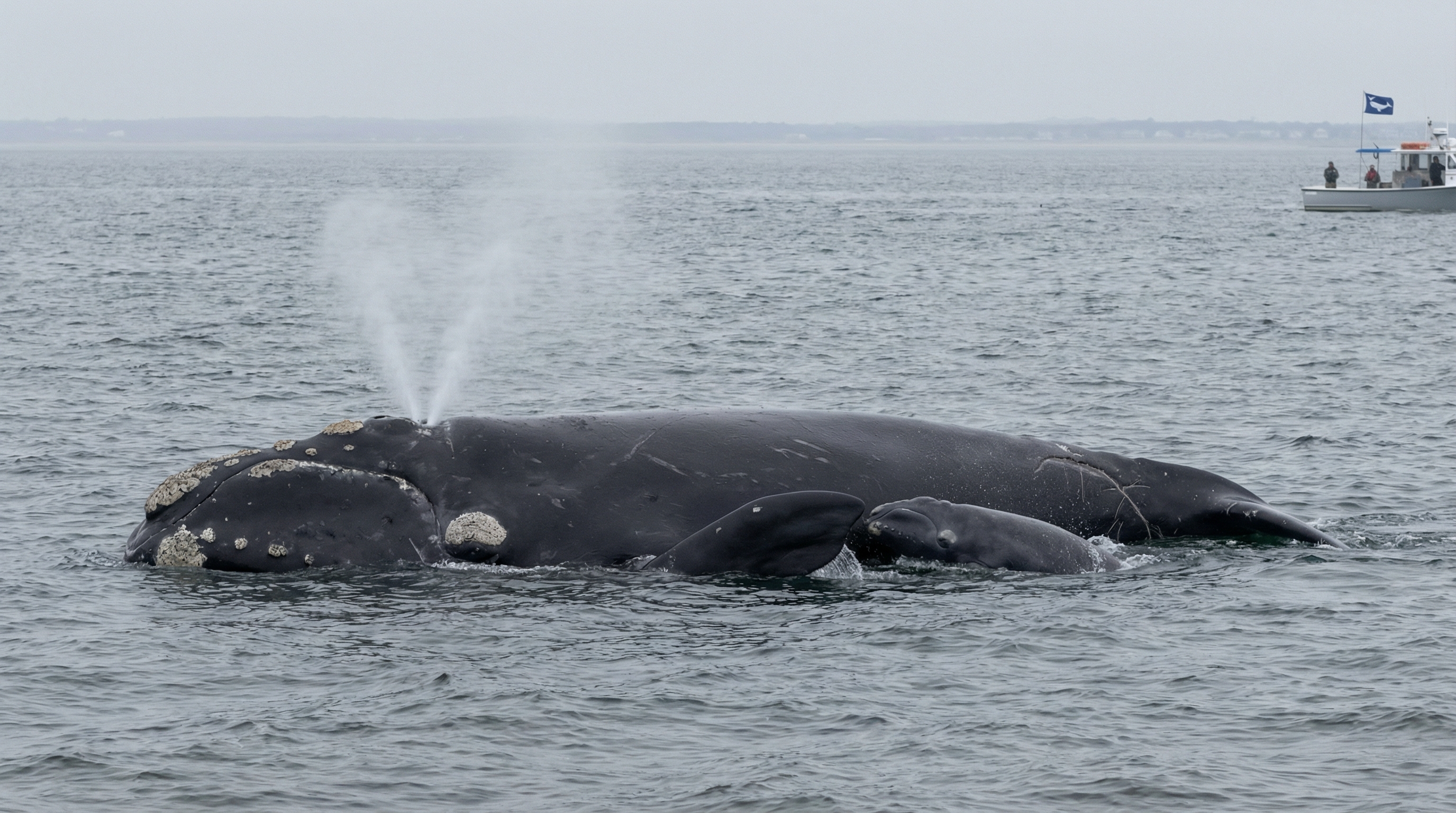
Right Whale
Eubalaena glacialis
IUCN: Critically EndangeredAbout Right Whale
North Atlantic right whales are among the most endangered large whales on Earth, with fewer than 350 individuals remaining. They got their name because whalers considered them the 'right' whale to hunt—they float when dead and yield abundant oil.
Right whales are easily identified by their lack of dorsal fin, broad backs, V-shaped blow, and the callosities (rough, raised patches of skin) on their heads. Each whale's callosity pattern is unique, like a fingerprint.
🌊 Habitat
North Atlantic right whales inhabit the coastal waters of eastern North America, migrating between summer feeding grounds off New England and Canada and winter calving grounds off Georgia and Florida.
🦐 Diet & Feeding
Right whales are skim feeders, swimming slowly at the surface with their mouths open to filter copepods and other tiny zooplankton. They have the longest baleen of any whale species, up to 8 feet in length.
🐋 Behavior
Right whales are slow swimmers, typically moving at 2-3 mph. They're known for 'SAG' (Surface Active Group) behavior during mating, where multiple males compete for a female. They can be curious and approach boats.
👶 Reproduction
Females give birth to a single calf after a 12-13 month gestation, typically in the warm waters off Florida and Georgia. The calving interval has increased from 3-5 years to 6-10 years due to nutritional stress, contributing to the population decline.
🛡️ Conservation Status
North Atlantic right whales are Critically Endangered with fewer than 350 individuals. Ship strikes and fishing gear entanglement are the leading causes of death. Conservation measures include speed restrictions for ships and fishing gear modifications.
Fun Facts About Right Whale
Right whales were named because they were the 'right' whale to hunt
Their callosities are home to whale lice and barnacles, giving each whale a unique pattern
Right whales have no dorsal fin and very long baleen plates
Females don't start reproducing until age 10 and have calves every 6-10 years
They're so slow and buoyant that they float when dead—unusual for whales